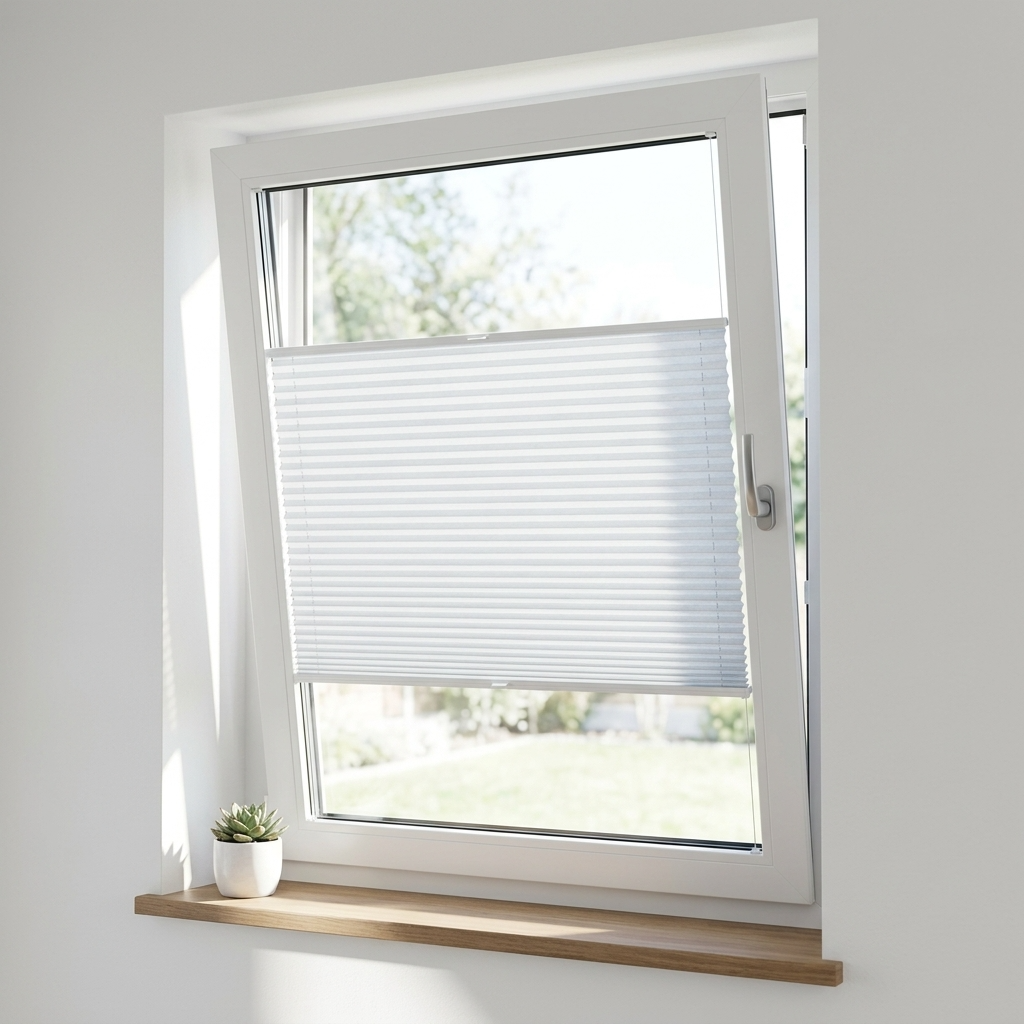
Which Blinds Work Best with Tilt-and-Turn Windows?
Tilt-and-turn windows are becoming increasingly common in modern homes, apartments, extensions and replacement window projects.
They are practical, secure and excellent for ventilation. Turn the handle one way and the top of the window tilts inwards; turn it again and the whole window opens into the room.
However, this flexible opening system can make choosing blinds more complicated.
A blind that works perfectly well on a conventional outward-opening window may obstruct the handle, swing away from the glass or prevent a tilt-and-turn window from opening properly.
At Etienne Curtains & Blinds, we help homeowners across Chesterfield, Derbyshire, the Peak District and surrounding areas find made-to-measure blinds that work with the window rather than against it.
Why Are Tilt-and-Turn Windows More Difficult to Blind?
The main challenge is that the window opens into the room.
A conventional blind fitted within the recess may sit directly in the path of the opening sash. The blind, headrail or brackets could prevent the window from tilting or opening fully.
Other details also need to be considered, including:
How far the window handle projects The depth and shape of the glazing bead The distance between the frame and the edge of the recess Whether the window is uPVC, aluminium or timber How frequently the window will be opened Whether the blind needs to remain closed while the window is tilted The amount of privacy, glare or room darkening required
This is why it is important to choose the blind only after the window has been properly assessed.
Frame-Fitted and No-Drill Blinds
For many suitable uPVC and aluminium tilt-and-turn windows, a frame-fitted or no-drill blind is one of the neatest solutions.
Instead of being attached to the wall or the top of the recess, the blind is fitted closely to the individual glazed panel. It therefore moves with the window when it is tilted or opened.
This can provide several practical advantages:
The blind stays close to the glass It does not swing away when the window moves The window can usually be operated without raising the blind There are no loose lengths of fabric hanging into the room The overall appearance is clean and integrated No conventional wall-mounted brackets are required
The blind looks more like part of the window rather than a separate covering positioned in front of it.
Not every window frame is compatible with every no-drill system, so the glazing bead, seals and available clearances must be checked before anything is ordered.
Pleated Blinds for Tilt-and-Turn Windows
Pleated blinds are a popular choice because they have a slim profile and sit neatly against the glass.
They are available in a wide selection of colours, textures and performance fabrics, ranging from gently light-filtering materials to more private and room-darkening options.
A pleated blind can work particularly well in:
Bedrooms Home offices Modern kitchens Apartments Conservatories Garden rooms Contemporary extensions
The fabric folds into a compact stack when the blind is raised, helping to keep the window looking uncluttered.
Duette® Blinds for Improved Comfort
Duette® blinds use a cellular or honeycomb-shaped fabric rather than a single pleated layer.
The pockets within the fabric help create an additional barrier between the room and the glass. This makes Duette® blinds worth considering where temperature control and comfort are important.
They can be especially useful on tilt-and-turn windows in:
Rooms exposed to strong sunlight Bedrooms that become cold overnight Glazed extensions Home offices affected by screen glare Properties with several large windows
Different levels of light filtration and room darkening are available, allowing the fabric to be selected around the way the room is used.
Aluminium Venetian Blinds
Aluminium Venetian blinds are another practical frame-fitted option.
The adjustable slats allow you to alter the angle of the light without having to raise the complete blind. This can be particularly useful for windows facing a road, neighbouring property or busy outdoor area.
They are also easy to wipe clean, making them suitable for kitchens, utility rooms and some bathrooms.
Because the blind remains close to the glass and moves with the opening section, it avoids the movement and rattling that can occur when a conventional Venetian blind hangs freely in front of an opening window.
Can You Fit a Roller Blind?
A roller blind may still be possible, but its position needs careful consideration.
On a compatible frame, a fitted roller system can move with the window in much the same way as a pleated or Venetian blind.
A conventional roller blind fitted above or outside the recess may also work where there is sufficient clearance. However, it may need to be raised before the window can open fully.
This may be perfectly acceptable on a window that is opened only occasionally. It is less convenient on a kitchen, bedroom or home-office window that is regularly tilted for ventilation.
The width of the blind, the position of the brackets and the direction in which the fabric rolls can all affect the final result. https://www.etienne.org.uk/perfecrfit/
Consider How the Room Is Used
The best blind is not determined by the window alone.
The room itself also affects which fabric and blind type will be most practical.
For a bedroom, privacy and room darkening may be the priority. In a home office, reducing glare while retaining natural light may matter more.
A kitchen or bathroom may require a wipeable or moisture-resistant material. A street-facing room may benefit from adjustable Venetian slats or a fabric that provides privacy without making the room unnecessarily dark.
It is also worth considering whether several tilt-and-turn windows are positioned next to one another. The blinds should be aligned carefully so the frames, fabrics and operating points create a balanced overall finish.
Why Professional Measuring Matters
Tilt-and-turn windows often look straightforward until the handle, hinges, seals and opening clearances are measured properly.
Even a small error can result in a blind that catches against the frame, restricts the window or does not sit correctly against the glass.
A professional survey allows the fitter to check:
The precise glass and bead dimensions Frame and seal compatibility Handle clearance The movement of the window in both positions The most suitable blind system Fabric and hardware options How neighbouring windows will align Safe and convenient operation
The aim is not simply to make a blind that covers the glass. It should allow the window to perform exactly as intended.
Blinds for Tilt-and-Turn Windows in Chesterfield and Derbyshire
Etienne Curtains & Blinds has been helping local homeowners choose practical, made-to-measure window coverings since 1991.
From our Chesterfield showroom, we provide product advice, professional measuring and expert installation for customers across Chesterfield, Dronfield, Sheffield, Matlock, Bakewell, Buxton, the Peak District and surrounding areas.
Our range includes pleated blinds, Duette® blinds, aluminium Venetians, roller blinds and no-drill systems suitable for many modern windows and doors.
If you are unsure which blinds will work with your tilt-and-turn windows, arrange a consultation with Etienne. We will assess how your windows open, explain the suitable options and help you choose a blind that provides the right combination of privacy, light control and everyday practicality.

